
Loading Advisory Intelligence...

Expertise
for what’s next
04 / 06
Indirect tax treatment depends on the transaction, its supporting documents and how it is recorded. We help businesses review VAT processes and cross-border flows, identify errors and maintain a clearer connection between commercial activity, invoices and returns - across VAT, customs duty and excise obligations.
Explore this serviceFrom initial review to practical next steps
Focused expertise for your requirements
Clear analysis, supported by your records
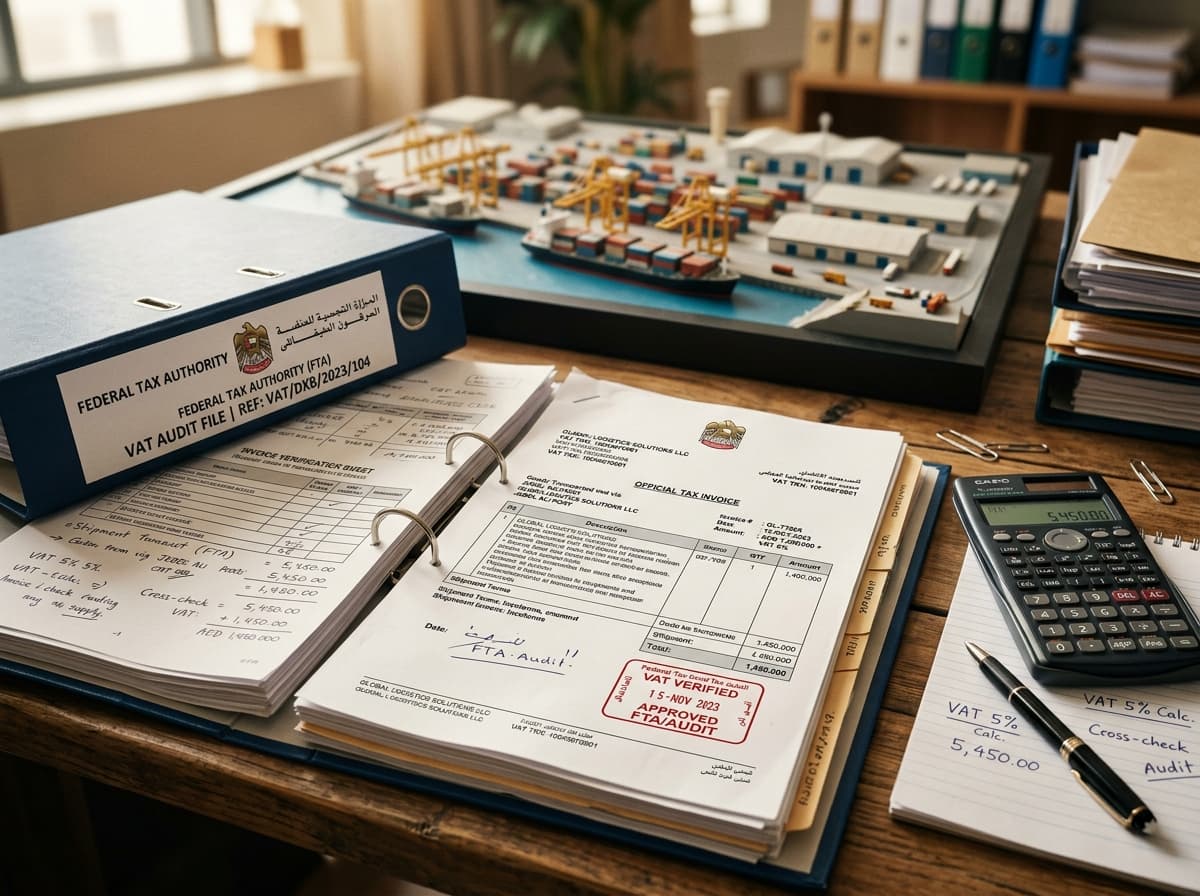
Your returns are prepared under time pressure and nobody re-checks classification or reconciles them to the ledger.
You trade across borders, through designated zones or in goods where customs and VAT treatment interact.
Input tax recovery is assumed rather than analysed, or a refund position keeps growing.
An authority query, a system change or an acquisition has exposed gaps in the indirect-tax process.
VAT & Indirect Tax
We assess relevant registration and group circumstances and help prepare application information. The work considers business changes and related compliance obligations, with attention to the records and reconciliations required to support the requested treatment.
We test whether registration, group formation or deregistration is actually the right position on your facts - turnover composition, entity relationships, planned changes - and prepare the application with the evidence the authority expects. Group applications include an honest view of the compliance consequences: one return, but joint responsibility and consolidated reconciliations.
You receive: A position assessment and complete application pack with the supporting reconciliations.
We review supplies, contracts and invoicing flows to assess the appropriate treatment. Areas can include place and time of supply, exemptions, zero-rating and reverse charge, assessed against the facts and the rules of the relevant jurisdiction.
For each supply type we answer the operative questions in order - what is supplied, by whom, to whom, where and when - and land on the treatment with the contract and invoicing consequences spelled out. New products, new markets and unusual deals get the same discipline before the first invoice is issued, which is far cheaper than correcting a pattern later.
You receive: A treatment memorandum per supply type with invoicing requirements and contract-clause guidance.
We reconcile return data to accounting records, review classification and identify exceptions requiring attention. Supporting workings provide an explanation of the reported amounts and unresolved items for management approval before submission.
Each period we tie every box of the return to the ledger, run exception checks on tax-code usage, large or unusual entries and manual adjustments, and resolve or escalate what falls out. The workings that accompany the return mean any figure can be explained months later without archaeology.
You receive: A reviewed return with box-by-box reconciliations and an exception log signed off by management.
We review recoverability of input tax, allocation methods and supporting documents. For businesses with mixed activities, we assess the basis used to separate recoverable and non-recoverable amounts and identify whether further review or an application is needed.
We test recovery claims against the use of each cost, verify the documents that support deduction, and - for mixed businesses - examine whether the apportionment method actually reflects how costs are consumed. Where the standard method distorts the outcome, we quantify the difference and assess the case for an alternative approach.
You receive: A recovery analysis with documentation findings and, where relevant, an apportionment-method assessment.
We examine selected periods, transactions and processes for potential errors or gaps. Findings include a prioritised remediation plan and an assessment of appropriate correction or voluntary disclosure routes, subject to applicable rules and the facts identified.
We sample transactions end to end - contract, invoice, entry, return - across the areas where errors concentrate: cross-border flows, adjustments, exempt-input recovery and rate or code changes. Each finding is quantified across the periods affected and matched to the correct correction route, so remediation is a decision made on numbers.
You receive: A quantified findings report with period-by-period exposure and a correction roadmap.
We assess the basis of a refund claim, prepare reconciliations and organise evidence. Support can include responding to requests for further information. Eligibility, timing and payment remain subject to the relevant rules and the authority's review.
We validate the refund position before it is claimed - the causes of the credit, the completeness of supporting documents, the reconciliation between claim and ledger - and assemble the evidence in the structure a reviewing officer will follow. When information requests arrive, responses are prepared from the same organised file rather than rebuilt under deadline.
You receive: A refund claim pack with reconciliations, an indexed evidence file and response support.
We review import and export documentation, supply chains and the tax treatment of goods or services moving across borders. Designated-zone analysis is transaction-specific; VAT designated-zone treatment is distinct from Corporate Tax Free Zone status.
We follow your physical and contractual flows - who ships what, where title passes, which documents exist at each step - and confirm the treatment and evidence each movement needs: export proof, import declarations, zone transfer records. Where goods move through designated zones, treatment is analysed movement by movement rather than assumed from the address.
You receive: A flow-by-flow treatment map with the documentary evidence checklist for each movement type.
We help assess classification, valuation, origin and relevant duty treatment for import and export arrangements. The work can identify documentation needs and inconsistencies between commercial, customs and Transfer Pricing records, with specialist clearance support coordinated where required.
We review tariff classifications against product specifications, test declared customs values against the pricing actually charged - including the effect of transfer-pricing adjustments on declared values - and check origin claims against supplier evidence. Discrepancies between what customs, finance and the TP file each say are surfaced and fixed before an audit finds them.
You receive: A customs review covering classification, valuation and origin, with a consistency reconciliation across records.
We review whether products and activities fall within the relevant excise framework and help organise registration, records and return information. Product treatment and calculation requirements are assessed against current rules; not every business or product is in scope.
We analyse product specifications and business activities against the excise framework to confirm what is genuinely in scope, then set up the registration, stock records, price lists and return workings the regime requires. For borderline products, we document the analysis supporting the position taken so it can be defended if questioned.
You receive: A scope determination with registration support and compliant record and return templates.
We prepare technical analyses for areas of uncertainty and help organise responses during authority reviews. Where a matter becomes disputed, the work connects with Tax Regulatory & Controversy support and appropriate authorised representation.
For genuine uncertainty, we frame the clarification question and build the supporting analysis; during a review, we manage the response file - reconciliations, document indexes, drafted explanations - and check every submission for internal consistency. If the matter hardens into a dispute, the file is already organised for the escalation process.
You receive: A clarification submission or an organised audit-response file, consistent and escalation-ready.
We review invoice fields, tax codes, master data and reconciliations from an indirect-tax perspective. System-wide readiness and implementation coordination are addressed under Global Tax & Emerging Regulations, with technology providers involved as appropriate.
We audit how tax is actually determined inside your system - code logic, customer and supplier master data, invoice field population and the reconciliations between subledgers and returns - and specify the corrections that make the system produce compliant documents by default, so accuracy stops depending on manual intervention.
You receive: A tax-controls findings report with a prioritised system-correction specification.
We help businesses map obligations arising from regional activity and coordinate country-specific advice or compliance support. Practical training can address the transactions and controls used by the finance team. GCC countries must not be treated as one uniform VAT regime.
For businesses operating regionally, we build an obligations map by country - registrations, filings, invoicing rules and their differences - and coordinate local advisers where country filings require them. Training is built from your own transactions and error history, so the finance team practises on the situations they actually face.
You receive: A regional obligations map, coordinated country support and a tailored training programme.
Tell us about the transaction or question and we will outline the work involved.